Friday, 11 April 2014

Case Study Digital Media Story ..

BBC to extend time programmes are available on iPlayer

http://www.theguardian.com/media/2014/apr/04/bbc-extend-time-programmes-iplayer-series-stacking
BBC iPlayer

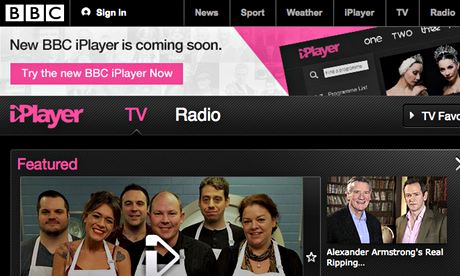
BBC shows including Sherlock, Doctor Who and Top Gear will soon be available to watch for up to 30 days after first transmission on online video service iPlayer, giving viewers an extra three weeks to catch up with their favourite shows. The BBC will extend the amount of time its programmes are available on its iPlayer video-on-demand service from seven to 30 days after the proposals were approved by the BBC Trust, effectively quadrupling the amount of content on offer. iPlayer, which had a record 3 billion requests for TV and radio programmes last year, with a top 20 dominated by BBC2's Top Gear, will make the change to its catch-up window in the summer.

However, a further change will mean some programmes are actually available for less time, with an end to the "series stacking" option that enable viewers to download all episodes of a series retrospectively. While the amount of TV programmes available on the iPlayer will increase fourfold, the total amount of radio content will increase around two and a half times. Diane Coyle, vice chairman of the BBC Trust, said: "With an average of 10.7 million programme requests every day, BBC iPlayer is highly valued by audiences and has been a phenomenal success since it launched six years ago. "It is important that iPlayer continues to evolve and meet the expectations of users. We have conducted a thorough assessment of these proposals, including taking independent advice from Ofcom, and concluded that this is a sensible move that will benefit audiences and provide a clearer and more consistent catch-up service."

In a statement, the BBC said: "People keep telling us they want programmes to be available on BBC iPlayer for longer – so extending availability from seven to 30 days will make iPlayer even better. "New iPlayer already has downloads, better recommendations, HD, live restart, favourites and collections, and extending the catch-up window to 30 days gives people even longer to enjoy their favourite BBC programmes. We will now set about making this happen with the aim to roll this out from the summer."

Weekly NDM Story ..

Daily Mail picture manipulation was 'an editorial mistake'


The Daily Mail has conceded that the picture manipulation I reported on yesterday was "an editorial mistake", according to Press Gazette. The image showed Tottenham footballer Emmanuel Adebayor saluting manager Tim Sherwood after he had scored a goal during Tottenham's 5-1 defeat of Sunderland. But the Mail - unlike The Guardian and the Daily Telegraph - deleted the man standing next to Sherwood, a member of Spurs' coaching squad, Chris Ramsey. A spokesman for the Daily Mail quoted by Press Gazette said it was not the paper's policy to manipulate news images and that it had been a "mistake". An internal investigation is underway. The original picture was taken by Kirsty Wigglesworth and distributed to newspapers by Associated Press, which prohibits digital manipulation of its photographs. The Daily Mirror also ran the image, choosing to obliterate Ramsey with a headline.

Weekly NDM Story ..

Newspaper publishers use e-commerce technology on website photos


The Daily Telegraph and Daily Mirror are experimenting with technology that turns online photographs into adverts, reports the Financial Times.It's an e-commerce system developed by a Finnish company, Kiosked. When people visit pages on the papers' websites, the technology scans the content and works out the most relevant advertisements to display. Then it overlays images of products that readers may wish to buy on the pictures. The FT's digital media correspondent, Robert Cookson, gives an example from Thursday's football reports on Mirror.co.uk. The image of a Bayern Munich player was overlaid with a Kiosked module offering ways to buy a replica Bayern kit. He quotes Kiosked's co-founder, Micke Paqvalén, as saying: "This is the next phase of e-commerce. It's a very powerful way for publishers to monetise their content." Paqvalén said other groups - such as The Guardian, DMGT and the Huffington Post, plus the magazine publisher Gruner+Jahr - are also planning to experiment with the technology. Evidently, the publishers do not plan to use Kiosked modules within their main news articles. They will be restricted to non-news sections, such as sport and entertainment.

NDM Case Study 10/04/14 Summary ..

How has the impact of new and digital media allow the audience to time shift and watch their programmes online such as BBC Iplayer and 4OD instead of following scheduled timing.


Saturday, 22 March 2014: Questions 1 & 2


Thursday, 27 March 2014: Question 3


Saturday, 29 March 2014: Question 4


Saturday, 29 March 2014: Questions 5 & 6


Monday, 31 March 2014: Question 7


Thursday, 10 April 2014: Questions 8 & 9


Thursday, 10 April 2014: Questions 10 & 11 


Thursday, 10 April 2014: Question 12

Thursday, 10 April 2014

NDM Case Study ..

How has the impact of new and digital media allow the audience to time shift and watch their programmes online such as BBC Iplayer and 4OD instead of following scheduled timing.


12- Consider theoretical perspectives in relation to the impact of new/ digital media in your case study. E.g. Representation of certain groups as a result of changes, Marxism & Hegemony, Liberal Pluralism, colonialism, audience theories etc.


Consider theoretical perspectives in relation to the impact of new and digital media (BBC iplayer, E-Media). 


Marxist:

Marxism is the idea that hegemonic leaders have control of the audience, all the control and power is down to the media and the society. Audiences never have nor ever will have full control over watch they want and what they want to watch because sub-consciously the media have full power and control to influence the audience.

Pluralist: 

Pluralism means that audiences believe audiences have full power over what they do and what they watch, they believe because of the developments in technology such as time-shifting and BBC iplayer they have all the power, being able to watch a programme wherever and whenever. Pluralist people are quite naive in the sense that audiences can't actually have full power, the media and society will always have a huge influence on the audience.

NDM Case Study ..

How has the impact of new and digital media allow the audience to time shift and watch their programmes online such as BBC Iplayer and 4OD instead of following scheduled timing.


10- What issues may there be regarding media effects and /or regulation/ censorship as a result of changes due to new and digital media?


What issues many there be regarding regulation and censorship of the BBC because of new and digital media (BBC iplayer)?


In terms of Regulation and Censorship the BBC are still in control because people pay for the content that the BBC provides to educate, inform and entertain

Ofcom has certain powers to regulate the BBC's licence fee funded television and radio services aimed at audiences in the UK, but not the World Service which is grant-in-aid funded. Ofcom's Broadcasting Code applies in the following areas:

  • Protection of under-18s
  • Harm and Offence
  • Avoidance of inciting crime or disorder
  • Responsible approach to religious content
  • Prohibition of use of images of very brief duration
  • Fairness
  • Privacy.

The Editorial Guidelines reflect the provisions of the Ofcom Broadcasting Code in these areas.

11- Are there any cross-cultural factors and /or effects of globalisation involved in the impact of new technology on your case study?


Are there any effects of globalisation involved in the impact of new technology (BBC iplayer, E-Media)? 


The internet being the new way audiences watch Television means our content has become viral, being able to watch programmes from all around the world, however, the BBC only allows their content to be seen in some countries, for example, people in Egypt aren't allowed to watch content on the BBC. This also means BBC iplayer isn't allowed either. 

"Globalisation is usually blamed, but some elements of the "modern world", especially digital technology, are pushing back against the tide." - Jonathan Amos

It could be argued that the reason Egypt and other counties aren't allowed to watch the BBC is because of democracy, England being such a diverse and democratic county will give other counties ideas like China, giving people the confidence to speak up and ask for their rights as humans therefore putting pressure on the leaders of the countries.

NDM Case Study ..

How has the impact of new and digital media allow the audience to time shift and watch their programmes online such as BBC Iplayer and 4OD instead of following scheduled timing.


8- What are the political and social implications of the new technologies and the methods of their consumption? E.g. moral panics etc?


What are the political and social suggestions of BBC iplayer and the way the audience consume Television?


Socially, people suggest that BBC iplayer is the new way of watching BBC. BBC iplayer is mainly popular with the teenage audience, it's easier and better, socially it creates the idea of being flexible, being able to go out with friends and socialising and then coming home and catching up on BBC iplayer. In terms of audiences consuming the programmes, well the website has the option to watch live which enables the audience to relax and watch it wherever, whenever they want. Also with the new download button people are now able to watch their programmes offline, no longer needing the internet.

Is there Still a Place for Public Service Television?

RECONSIDERING THE TELEVISION ENVIRONMENT

The internet offers an enormous selection of content from which consumers may satisfy informational and entertainment needs traditionally met by television. The transition to fully digital television marks an appropriate point to re-examine the economics of television broadcasting and the case for public service broadcasting. The consumer concern recognises that there may be market failures in broadcasting such that it fails to deliver the outputs that consumers themselves want to watch. These priorities are captured by the BBC’s Reithian mission to ‘inform, educate and entertain’. The TV licence fee, which supports the BBC’s public service activities, is currently frozen in nominal terms until BBC charter renewal in 2016; over the longer term multichannel households may prove resistant to substantial increases in its value or object in greater numbers to the principle of a compulsory licence fee

Tony Hall: BBC is admired around the world – full speech

Values of the BBC ..


  • They can be informed, entertained, educated – and, I would add, inspired
  • Anyone in this country who has a television, a radio, a computer, a smart device, has the best seats in the house for the Olympics, a front-row ticket for the best concerts, a box at the theatre for the greatest drama
  • Because no other public service is used quite the way the BBC is. Our service reaches 96% of the population in the UK every week. Every week.
  • Twenty years ago, the BBC received nearly 40% of all the revenues in broadcasting. Now the figure is around a quarter – 25% – a much smaller part of the media market.

Efficiency of the BBC ..


  • Between 2008 and 2013, the BBC delivered savings at an average rate of 3.7% every year. The plans inherited seek another 20% annual savings by 2016/17 – that's an extra 4%, on average, we have to find every year
  • We've made the most of our commercial income from BBC Worldwide, with returns to the BBC for investment in programmes reaching over £150m last year.

The licence fee ..


  • The BBC's mission is to inform, educate and entertain. The licence fee means we must do this for all, not just for some.
  • Universal access and the licence fee support each other. Because nearly everyone in the country uses us every week, we are not asking people who do not use the service to pay for it.
  • Support for the licence fee is at 53% – way ahead of subscription on 17% and advertising on 26%. It's the top choice for funding the BBC across all ages, all social-economic groups and whether you're in a Freeview, Sky or Virgin household.
  • Yet having no advertising is one of the characteristics that people most value about the BBC
  • It's not just the interruption that people dislike. Advertising would also narrow the range of content on the BBC. And by taking advertising money away from ITV and Channel 4 it would make public service broadcasting much worse across the board.

9- Consider the effects so far, and possible effects in the future, on media institutions involved in your case study (media production).


Consider the effects on the BBC so far and the possible effects in the future because of BBC iplayer?


The BBC haven't been effected that badly because BBC iplayers controlled and owned by the BBC and is paid for through the License Fee. In the future it can only get better for the BBC because Tony Hall wants to increase the License Fee so that it covers the online bases of the BBC, at the moment the BBC charge 55p per month which doesn't really cover the amount of people that use BBC iplayer, now that it's become more popular than the traditional way of watching TV.  

There’s also been lots of talk about the availability of iPlayer, there’s news about plans for the Mac version and a US version too is apparently on the way. We, though, can give a different perspective, a bit of insight on things and maybe explode a few myths. Here’s just a few headlines:

  • 5% growth in total average usage since 1st December
  • 66% growth in volume of streaming traffic since 1st December
  • 2% growth in the number of customers using their connection for streaming since 1st December
  • 72% growth in the number of customers using over 250MB of streaming in a month since December
  • 100% growth in the number of customers using over 1GB of streaming in a month since December
  • Cost of carrying streaming traffic increased from £17,233 to £51,700 per month

At the moment the majority of this growth in traffic will be down to iPlayer (with some 4OD and Sky Anytime thrown in) and likely most people will be watching it on their PCs. We can only imagine what the growth will be like when that majority shifts from the PC to the TV.